

This painting by the late master Faramarz Pilaram is a rare example of the fusion of script, color, rhythm, texture, and ritual in modern Iranian art. It demonstrates how Pilaram transformed the language of calligraphy into a painterly one—a language neither textual nor purely abstract, but one that preserves Iran’s cultural memory within the framework of modernism.
Raha Gallery's Collection
19 Content
-
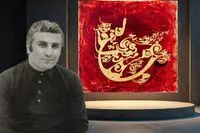 Faramarz Pilaram and the Sacred Rotation in the Raha Gallery Collection
 -
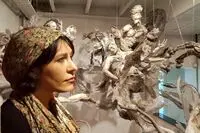 Vohu-Manah (Vohuman) in Bundahishn by Elham Fallahi :The Wounded Guardian of Waters, Raha Gallery Collection
The sculpture Vohuman occupies the uppermost position in the vast and astonishing installation Bundahishn—placed precisely above the figure of Ahura Mazda. It is not merely one among the 82 sculptures constituting the work; it bears a distinct philosophical reading: a figure with closed eyes, holding a fish to its chest. Fallahi’s Vohuman is the wounded guardian of life—an entity that, in a chaotic world, brings forth good thoughts not by force, but through an embrace.
-
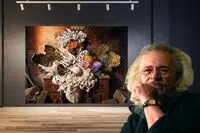 Wahed Khakdan in the Raha Gallery Collection
Wahed Khakdan, the distinguished Iranian painter, passed away a few days ago, on October 23, at the age of 75. In tribute to this eminent artist, we examine one of his remarkable and thought-provoking works preserved in the Raha Gallery Middle East Collection — a seminal painting in which Khakdan, the master painter, creates a poetic and melancholic dialogue between childhood and violence, between beauty and destruction. Each component of the painting carries a visual memory that, when…
-
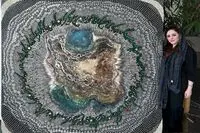 Bita Vakili and the Map of Iran in Raha Gallery Collection / A Painting that Comes with Its Own Music and Song
This painting by Bita Vakili, which is accompanied by an exclusive piece of music and song, can be regarded as a work that reinterprets national identity from a contemporary and multimedia perspective. Vakili, by combining material science, cartography, and conceptual art, portrays Iran not as a geographical boundary but as a living, dynamic, and multilayered being. In her vision, metals flow like the veins of civilization through the body of the earth, and every bolt and washer bears the mark…
-
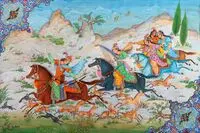 MohammadAli Zaviyeh in the Raha Gallery Collection
This painting is a remarkable example of the enduring tradition of Persian miniature painting in the modern era—an artwork that poetically and vividly reimagines Iran’s epic and mythological past through a precise and expressive visual language. While remaining faithful to classical forms, Zaviyeh infused the work with his own rhythm, palette, and composition, creating a piece that is both a reflection of history and a mirror of the Iranian aesthetic spirit.
-
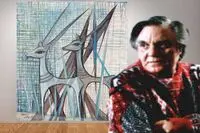 Jazeh Tabatabai and the Earthenware of Susa in the Raha Gallery Collection
The traces of goats on the painted ceramics of ancient Susa find their way into the gazelles of Persian poetry and Iranian miniature in this painting, which has endured for more than half a century. The fusion of the “mythical animal” with “geometric abstraction” embodies a quest for identity—one that remains distinctly Eastern and Iranian, yet resonates in dialogue with international modern art.
-
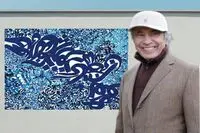 Hossein Zenderoudi in Raha Gallery Collection
The 53-year-old work Variation Tendre Tourmaline by Hossein Zenderoudi bears a French title meaning “Tender Tourmaline,” a poetic reference to a semi-precious stone. The name infuses the composition with a sense of preciousness and delicacy, enhancing the gem-like quality of its calligraphic lines. The painting is a visual–spiritual experience: letters swirl like particles of energy, inviting viewers to contemplate both meaning and form.
-
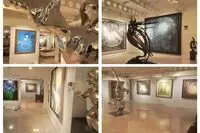 Raha Gallery Collection Through the Lens of Iran Art / Photos
The Raha Gallery Collection, founded and directed by engineer Mohammadreza Ghaemmaghami, has been actively engaged in promoting regional art for over two decades. With a sustained cultural mission focused on elevating the arts of the Middle East, the collection houses an exceptional selection of modernist and contemporary masterpieces by leading Iranian and Arab artists.
-
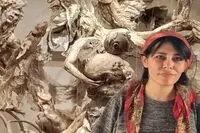 Elham Fallahi’s Ahura Mazda Sculpture in the Bundahishn Installation at Raha Gallery Collection
The sculpture Ahura Mazda, at the heart of Elham Fallahi’s monumental installation Bundahishn, is not merely one among its 82 sculptures but the conceptual, visual, and philosophical core of the work—the point where chaos and waste are transfigured into creation and meaning.
-
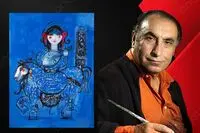 Nasser Ovissi in Raha Gallery Collection
Nasser Ovissi is perhaps the only Iranian artist to have held a joint exhibition with Salvador Dalí. In this luminous painting, blue reigns supreme — the very soul of the work; a color that in Iranian culture symbolizes tranquility, spirituality, and the sky. Against this vast blue expanse, flashes of red in the cheeks, the horse’s ear ornaments, and the woman’s ribbons pulse like a warm heartbeat, guiding the viewer’s gaze toward the focal points.