

Kiarash Yaghoubi Shines in Paris / The “Nûn” Calligraphy Competition and the Contest Among Calligraphers from 32 Countries Seyed Majid Moosavi Moghadam
The first international “Nûn” calligraphy competition at the Grande Mosquée de Paris marked its centenary with 30 laureates from 32 countries. With €57,000 in prizes, it highlighted six major Arabic and Islamic calligraphic traditions in Paris.

IranArt:
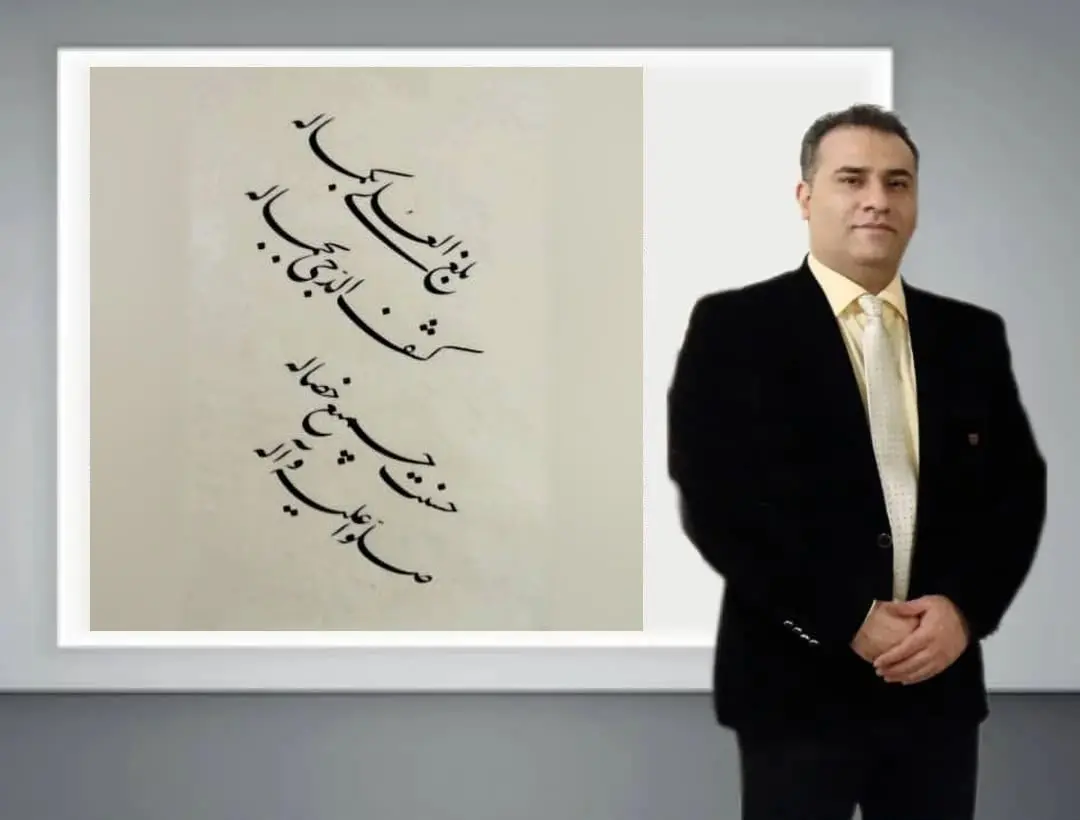
Kiarash Yaghoubi, a recognized calligrapher and painter of calligraphy, attracted attention at the Paris “Nûn” Calligraphy Competition, receiving Second Prize in the Nasta‘liq category.
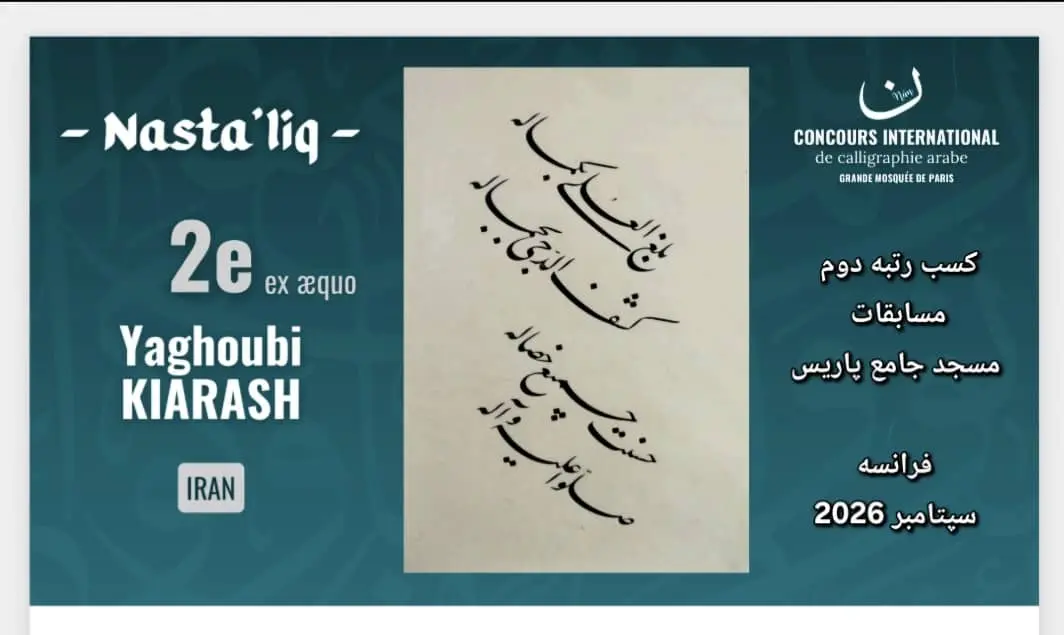
The specifications of Kiarash Yaghoubi’s work, which stood out at this international event, are presented in the competition catalogue as follows: 70 × 50 cm, burnished paper (Ahar-Mor), 5 mm pen nib, a poem by Saadi in praise of the Prophet Muhammad, created to mark the centenary of the Grande Mosquée de Paris.
An interesting point is that Iranian artists received top rankings only in the Nasta‘liq category, with no Iranian laureates in the other five sections.
Another important point is the presence of four laureates from the Nasta‘liq category representing the Iranian and Persian calligraphic tradition: two artists from Iran, one from Azerbaijan and one from Oman.
Seyed Majid Moosavi Moghadam won First Prize in Nasta‘liq, while Yaghoubi Kiarash shared Second Prize with Hossein Eghbali of Azerbaijan.
The joint Third Prize went to Mohammad Keshtkar of Oman and Hasan Akbar Fatkhullah of Indonesia.
The Grande Mosquée de Paris Centenary and the Nûn Calligraphy Competition
The Grande Mosquée de Paris is celebrating its centenary in 2026; an anniversary that its organizers have transformed from a simple commemoration of the history of a building into a broad program spanning culture, art and literature.
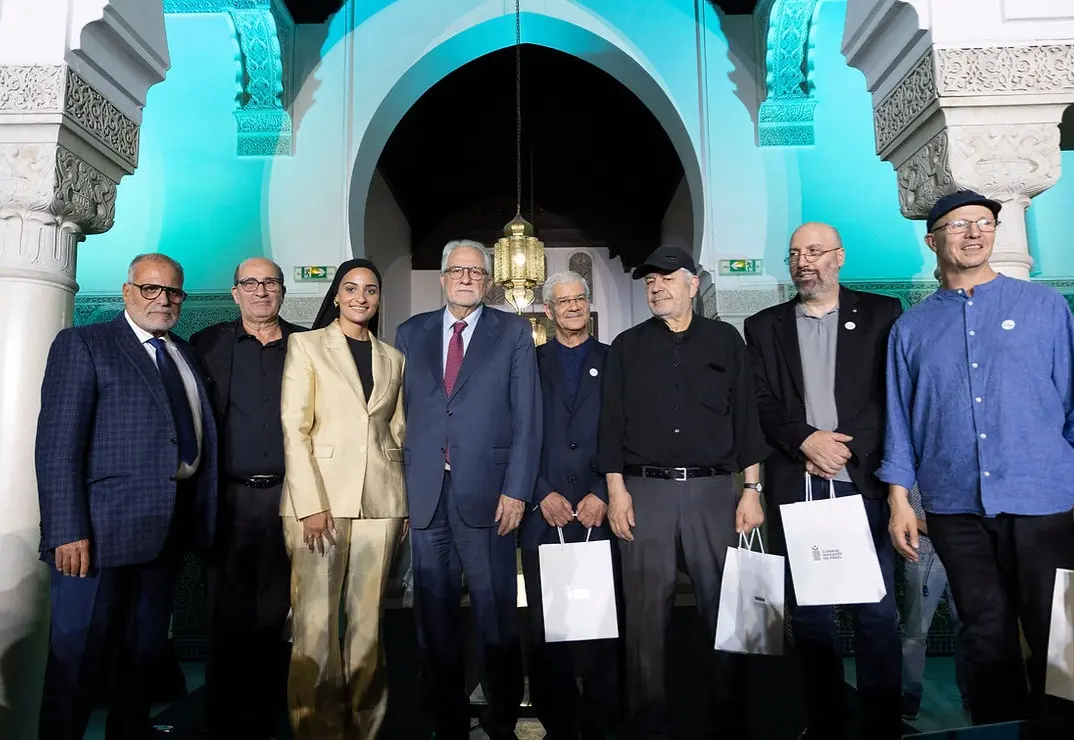
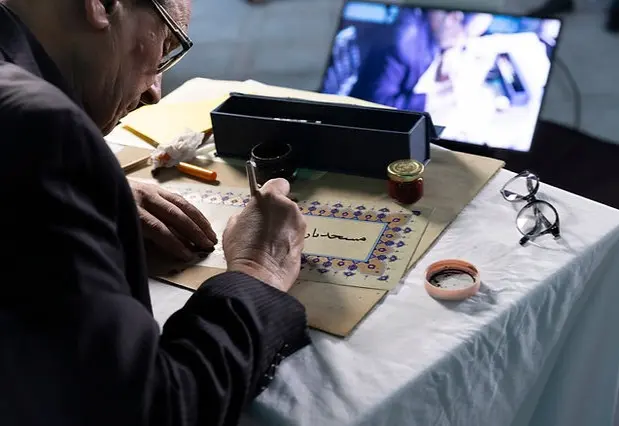
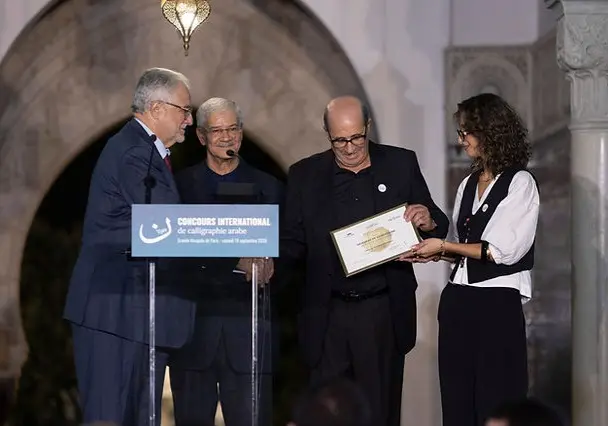
One of the most important events of the year was the first International Arabic Calligraphy Competition of the Grande Mosquée de Paris, titled “Nûn,” whose awards ceremony was held on 19 September 2026.
The Grande Mosquée de Paris announced that calligraphers from 32 countries participated in the competition, with 30 artists ultimately selected as laureates across six calligraphic styles.
_ “Nûn”: A Competition Named for the Pen and Writing
The title of the competition is taken from the letter “Nûn” at the beginning of Surat Al-Qalam:
“Nûn. By the pen and what they write.”
The competition was designed to support artists, preserve the classical traditions of calligraphy, and create cultural dialogue through the art form. The official competition regulations also emphasize that the aim of “Nûn” is to encourage, value and transmit the heritage of Islamic arts, particularly classical Arabic calligraphy.
Participants were allowed to compete in only one style, and works had to be submitted without a name, signature or any identifying mark that could reveal the artist’s identity. The use of ornamentation and illumination was also prohibited.
_ Six Styles: From Thuluth to Nasta‘liq
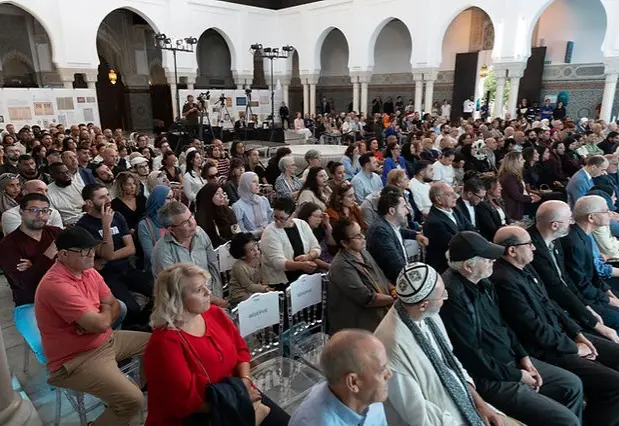
The competition was held in six styles:
Thuluth, Naskh, Nasta‘liq/Ta‘liq, Diwani, Kufi and Maghribi.
The official competition guidelines also specified the paper dimensions and the permitted range of pen thickness for each style. For example, Thuluth and Kufi works were submitted in a 70 × 50 cm format, while works in Naskh, Nasta‘liq, Diwani and Maghribi were presented in smaller formats.
_ 30 Laureates: The Complete List
In each of the six styles, one First Prize, one Second Prize and one Third Prize were designated. However, in several cases, the jury placed two works ex æquo in Second or Third Prize. As a result, the final number of laureates reached 30. The following list is based on the official winners’ document of the Grande Mosquée de Paris.
1. Kufi | Kufi
First Prize
• Reema Aldakheel — Saudi Arabia
Second Prize, ex æquo
• Yasir Karar — Iraq
• Chaima Tliba — Tunisia
Third Prize, ex æquo
• Djamel Fenineche — Algeria
• Mohammed Sabri — Morocco
2. Maghribi | Maghribi
First Prize
• Selma Ben Ammar — Tunisia
Second Prize, ex æquo
• Khadija Daoudi — Morocco
• Abdullah Ait Tadrart — Morocco
Third Prize, ex æquo
• Najah Safinatun — Indonesia
• Saad Benserhir — France
3. Diwani | Diwani
First Prize
• Jakfar Muhammad — Indonesia
Second Prize, ex æquo
• Abdulrazzak Mahmod — United Arab Emirates
• Abdessamad Mihfad — Morocco
Third Prize, ex æquo
• Juan Ma — China
• Khawla Belaib — Algeria
4. Nasta‘liq | Nasta‘liq
First Prize
• Seyed Majid Moosavi Moghadam — Iran
Seyed Majid Moosavi Moghadam
Second Prize, ex æquo
• Yaghoubi Kiarash — Iran
Kiarash Yaghoubi
• Hossein Eghbali — Azerbaijan
Hossein Eghbali
Third Prize, ex æquo
• Mohammad Keshtkar — Oman
Mohammad Keshtkar
• Hasan Akbar Fatkhullah — Indonesia
5. Naskh | Naskh
First Prize
• Ihab Ibrahim Tabet — Palestine
Second Prize, ex æquo
• Saïd Bin Abdullah — Algeria
• Jamalulael Idrus — Indonesia
Third Prize, ex æquo
• Hafizul Abqari — Malaysia
• Abderlrahman Mohamed Morsi — Egypt
6. Thuluth | Thuluth
First Prize
• Namazireihanloo Ahmadali — Türkiye
Second Prize, ex æquo
• Rahim Yaz — Pakistan
• Mohamed Ayache — Algeria
Third Prize, ex æquo
• Mohamed Ezat — Egypt
• Huda Purnawadi — Indonesia
_ The Geographic Composition of the Laureates
The final list demonstrates the considerable geographical reach of the “Nûn” competition. Among the 30 laureates are artists from Iran, Saudi Arabia, Tunisia, Iraq, Morocco, Indonesia, the United Arab Emirates, Algeria, France, China, Azerbaijan, Oman, Palestine, Malaysia, Egypt, Türkiye and Pakistan.
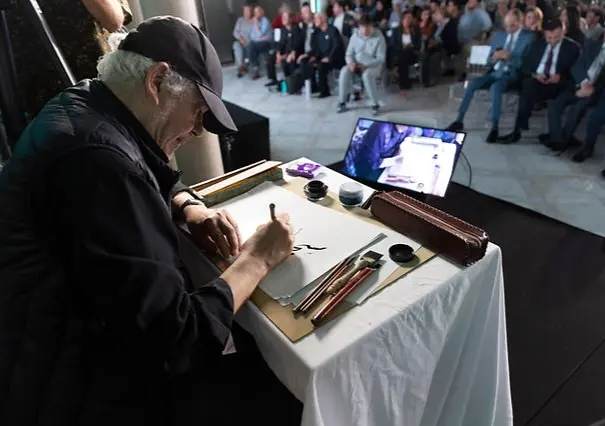
Indonesia, with several laureates across different styles—including Diwani, Maghribi, Nasta‘liq, Naskh and Thuluth—is one of the countries with a particularly strong presence in the final list. Morocco and Algeria have also secured rankings across several styles.
_ Judging Criteria: Discipline of the Script Before Beauty
The competition regulations emphasize that the works were evaluated according to the classical rules of calligraphy. Errors that altered the meaning of the text, spelling mistakes and failure to comply with the competition regulations could result in the rejection of a work. Participants were also advised to carefully check the text of the verses and their diacritical markings.
This point is important in understanding the nature of the competition: “Nûn” was not simply an aesthetic competition, but one that emphasized technical skill, precision, proportion and fidelity to traditional calligraphic rules.
_ Why Calligraphy for the Centenary of the Grande Mosquée de Paris?
The Grande Mosquée de Paris was inaugurated on 15 July 1926 and now, a century later, is pursuing its centenary program with a particular focus on art and culture. The mosque itself announced that the calligraphy competition would be one of the major cultural programs of its centenary year.
From this perspective, the choice of calligraphy for one of the principal events of the centenary is significant. The mosque’s architecture, gardens, zellij and decorative elements have been connected from the outset with the artistic traditions of the Islamic world, and the “Nûn” competition this time brought the script and the pen themselves to center stage.
_ From Paris to the Global Geography of Calligraphy
The first edition of “Nûn” offers a diverse picture of the geography of calligraphy today; from Iran and Türkiye and the Arab countries of North Africa to Indonesia, Malaysia, Pakistan, China and Azerbaijan.
This diversity becomes particularly significant alongside the selection of six different styles. Kufi represents one of the oldest traditions of Islamic script; Thuluth and Naskh occupy fundamental positions in written and Qur’anic traditions; Diwani is associated with the Ottoman tradition; Maghribi belongs to the writing traditions of the Maghreb and the western Islamic world; and Nasta‘liq is one of the most important legacies of Iranian and Persian calligraphy.
The “Nûn” competition is therefore more than simply a list of winners; it offers a portrait of a multi-centered artistic heritage that continues to be produced, taught and reinvented across different countries in the twenty-first century.
_ A Century After Its Inauguration: Art in a New Narrative at the Grande Mosquée de Paris
For its centenary, the Grande Mosquée de Paris has planned a series of cultural programs, from the international calligraphy competition to literary and exhibition programs, as well as its first short-film festival, announced for December 2026.
Among these initiatives, “Nûn” may be one of the clearest signs of the institution’s effort to connect Islamic heritage with the contemporary cultural landscape of Europe.
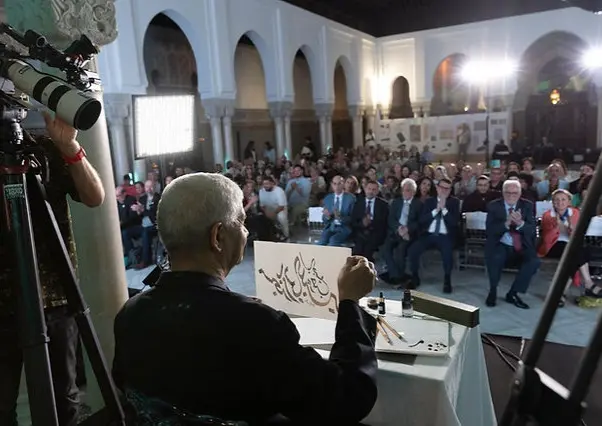
A century after the inauguration of the Grande Mosquée de Paris, the pen has once again taken center stage within this historic building; this time not simply for writing, but for an international competition that brought together 30 calligraphers from different parts of the world across six distinct traditions.
And perhaps this is the central image of the competition: in a city that is one of the world’s most important centers of modern and contemporary art, the pen and ink can still shape an international event.