

Mahboubeh Kazemi: The Middle East Must Recognize Zinat al-Sadat Emami — The Third Vertex of the Triangle Formed by Monir Farmanfarmaian and Fakhr-al-Nisa’ Zeid

The world does not know that the so-called male-dominated Middle East also produced remarkable women artists a century ago—women whose artistic creations have enriched humanity’s cultural heritage. Today, Zinat al-Sadat Emami, in her nineties in Isfahan, Iran, continues to shine. In my view, she forms the third radiant vertex alongside Monir Farmanfarmaian and Fakhr-al-Nisa’ Zeid.
IranArt — Mahboubeh Kazemi, founder and director of Baran Auction, the specialized auction of calligraphy and Islamic art, says:
“The Middle East, whether in classical, civilizational, or even modern art, holds vast capacities that must be illuminated differently so the world can view them from a renewed perspective.
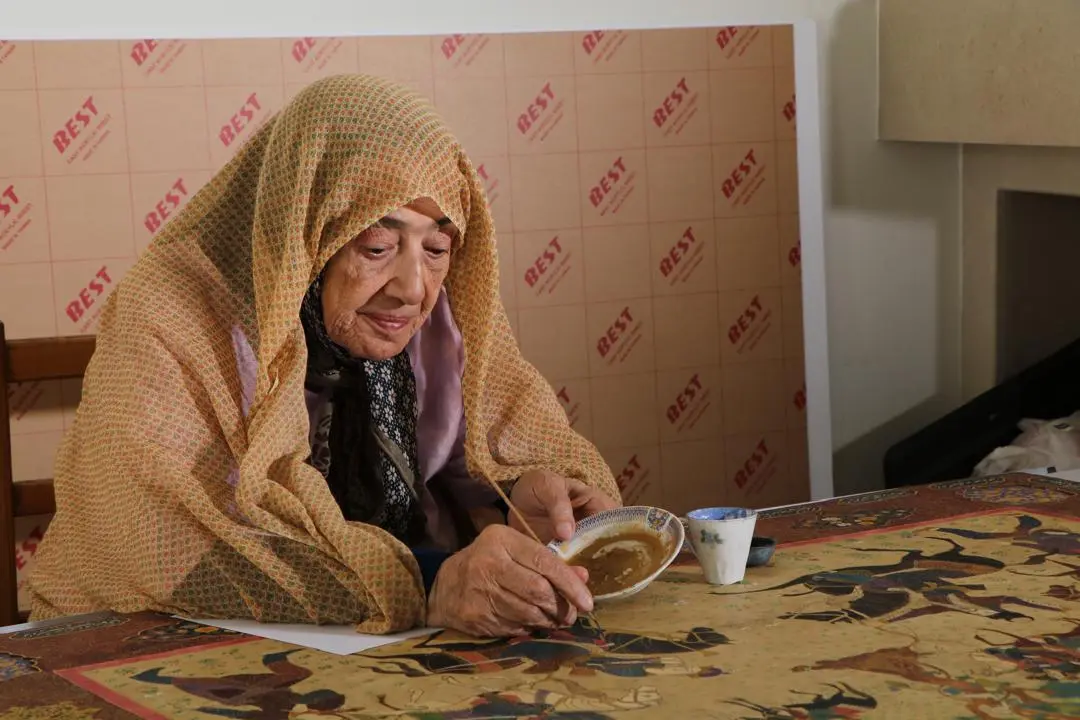
A missing chapter in this golden history is the story of women artists who, despite a patriarchal atmosphere that restricts their visibility—especially in art—have been creating for more than a century. One of the greatest and least-known of these is Zinat al-Sadat Emami, who at 91 still beautifies the world from her hometown of Isfahan with her astonishing miniature paintings and remains a pioneering figure in the revival of the art of sukht (pyrography).”
Kazemi emphasizes:
“Alongside the well-known women artists of the Middle East, Zinat al-Sadat Emami deserves to complete the distinguished triangle formed by Fakhr-al-Nisa’ Zeid and Monir Farmanfarmaian. These two great names are recognized thanks to the art market, but due to historical neglect, Zinat al-Sadat has not yet found her rightful place in the international market.”
She elaborates:
If the Middle East recognizes its second most expensive artist through the brilliance of Fahrelnissa Zeid—the Turkish-Jordanian artist (1901–1991)—and the record-setting sale of $2.7 million at Christie’s, and if Monir Farmanfarmaian (1922–2019) holds a privileged position in the high-end art market with her mirror works and architectural sensibilities, then Zinat al-Sadat Emami (born 1934, Isfahan) is the master who unites tradition and spirituality in intricate small-scale compositions. Her art stands as part of the cultural heritage of the region.
Her name shines among the miniature painters of Iran’s recent century—an artist who blends Safavid miniature, classical illumination, and the art of sukht (pyrography) in a spiritual, patient workshop practice.”
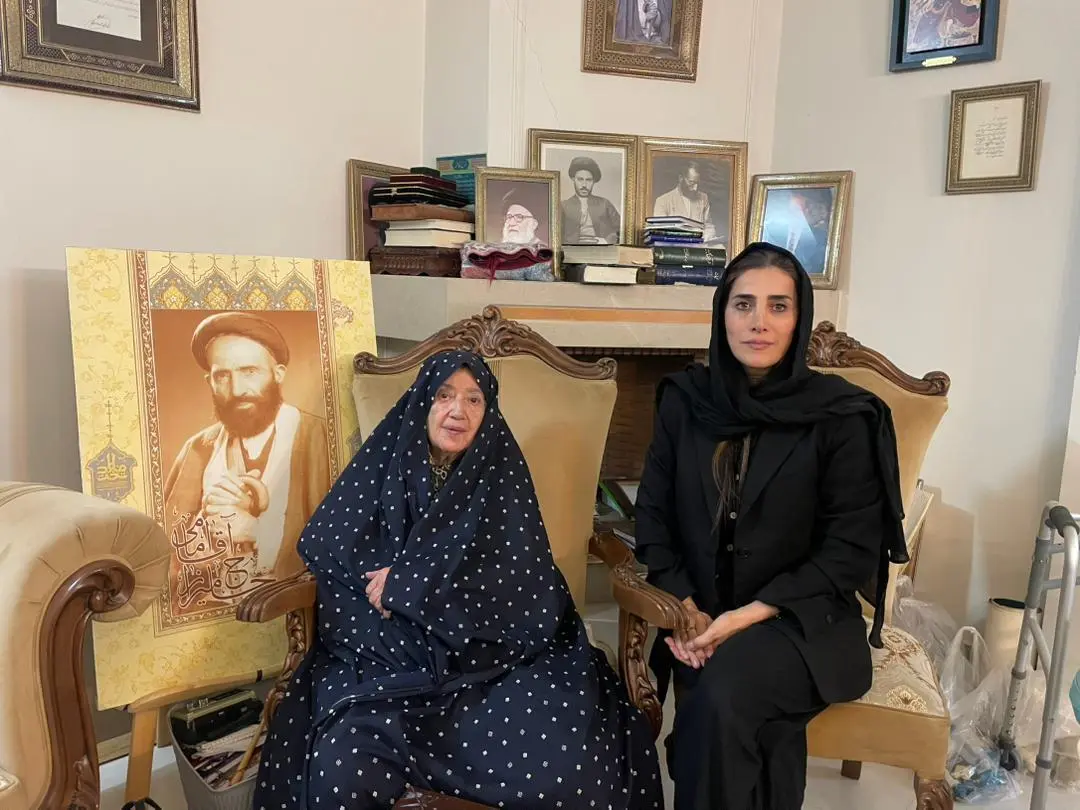
The founder and director of Taraneh Baran Gallery notes:
“Emami’s works are not merely displays of technique; they are reflections of the grandeur of ancient forms and narratives—where every line and every burned mark on wood reads like a sentence from a prayer or an old tale.”
Mahboubeh Kazemi recounts:
“At the age of 18, Zinat al-Sadat began learning Safavid-style miniature and Qajar-style gol-o-morgh (flower and bird) painting under her father.
She quickly mastered illumination and tash‘ir, and reached full maturity in the art of sukht. Interestingly, she learned gold-embossing—the final stage of sukht—from her mother and grandmother.
Sukht, one of Iran’s authentic artistic traditions, includes stages such as preparing parchment, coloring, patterning, marquetry, and more. The use of dark, opaque colors gives the art its name.
Although Iran was the birthplace of mystical pyrography and miniature, sukht fell into oblivion after the Safavid era—until Emami’s father, Mirza Aqa Emami, revived it, and his works are now sold globally at high prices.
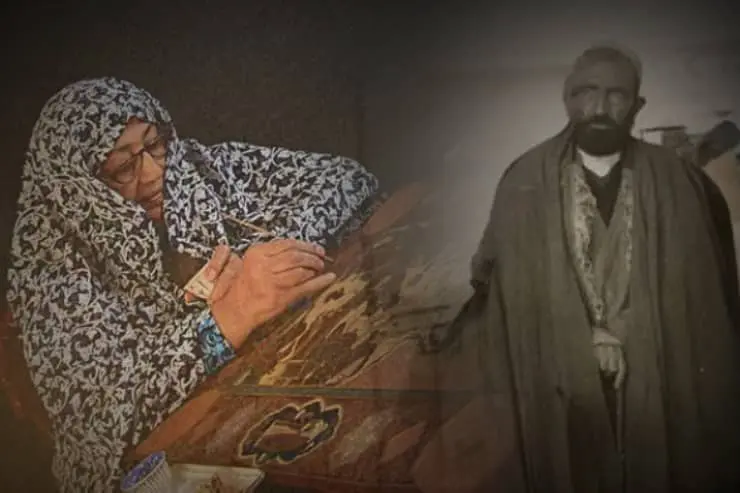

Building upon this ancient lineage, Zinat al-Sadat introduced new innovations: moving sukht from religious book covers to independent displayable panels, infusing it with layers of spirituality, and combining miniature, pyrography, illumination, and other arts with meticulous precision.”
These deeply ingrained traditional techniques—mastered from childhood—enabled Emami to create hybrid works where fine miniature merges with the textures and tonalities of pyrography. This lifelong apprenticeship has shaped her into an artist who is both a guardian and a teacher of tradition.
Kazemi adds:
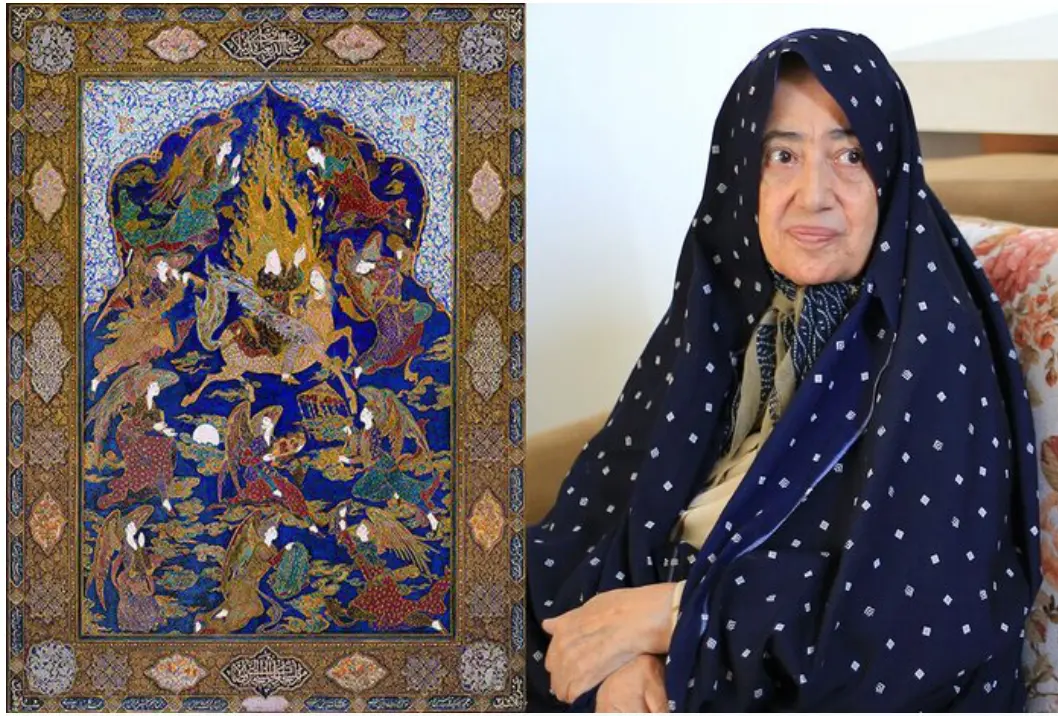
“Perhaps her most celebrated piece is The Ascension (Mi‘raj)—a breathtaking work that took nearly 30 years to complete and incorporates ten artistic disciplines. The piece is a meticulous fusion of miniature, illumination, sukht, and other decorative arts—a testament to her perfectionism and unified vision.

Mi‘raj can be seen as an ambitious tradition-based project—one that demands both technical mastery and a profound spiritual bond with the subject.”
In analyzing Emami’s works, Mahboubeh Kazemi notes:
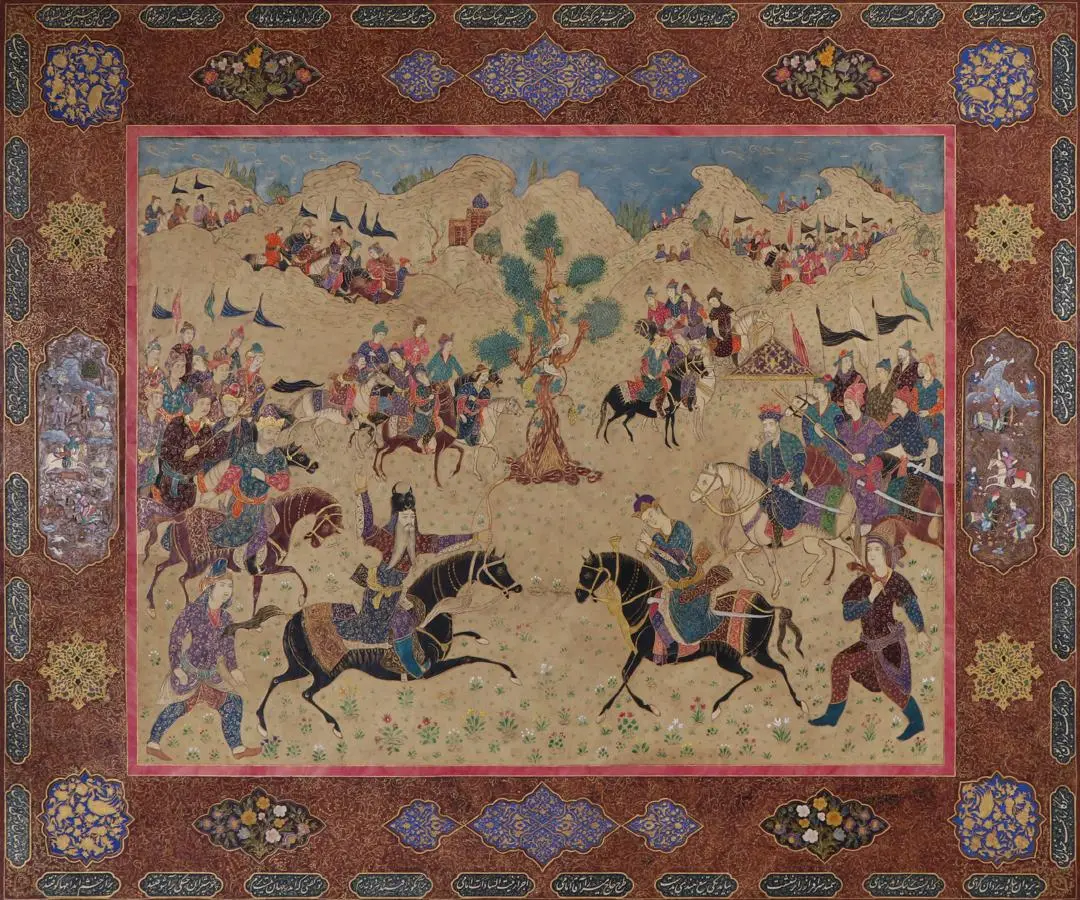
“Across Emami’s collections, certain qualities recur: meticulous rendering of faces and landscapes, an almost musical repetition of illuminated borders, and the use of sukht to create texture and shadow that draws the eye toward deeper layers.
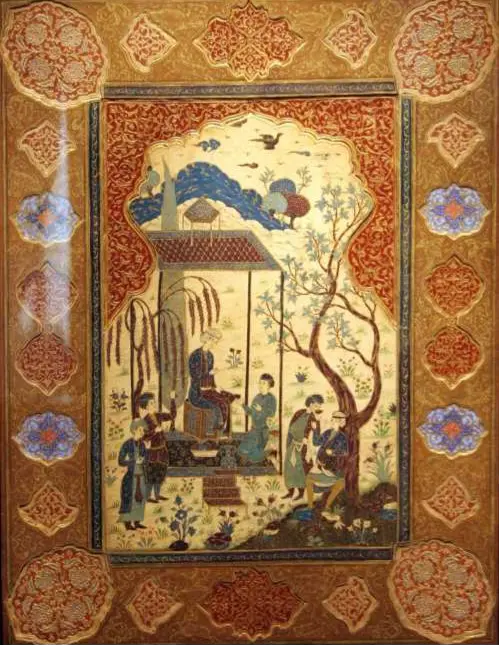
Her themes lean strongly toward spirituality—religious and mystical scenes, ritual imagery, and love stories reinterpreted through the miniature tradition. Yet her visual language remains compelling to contemporary viewers because her interplay of techniques generates freshness and visual richness.”
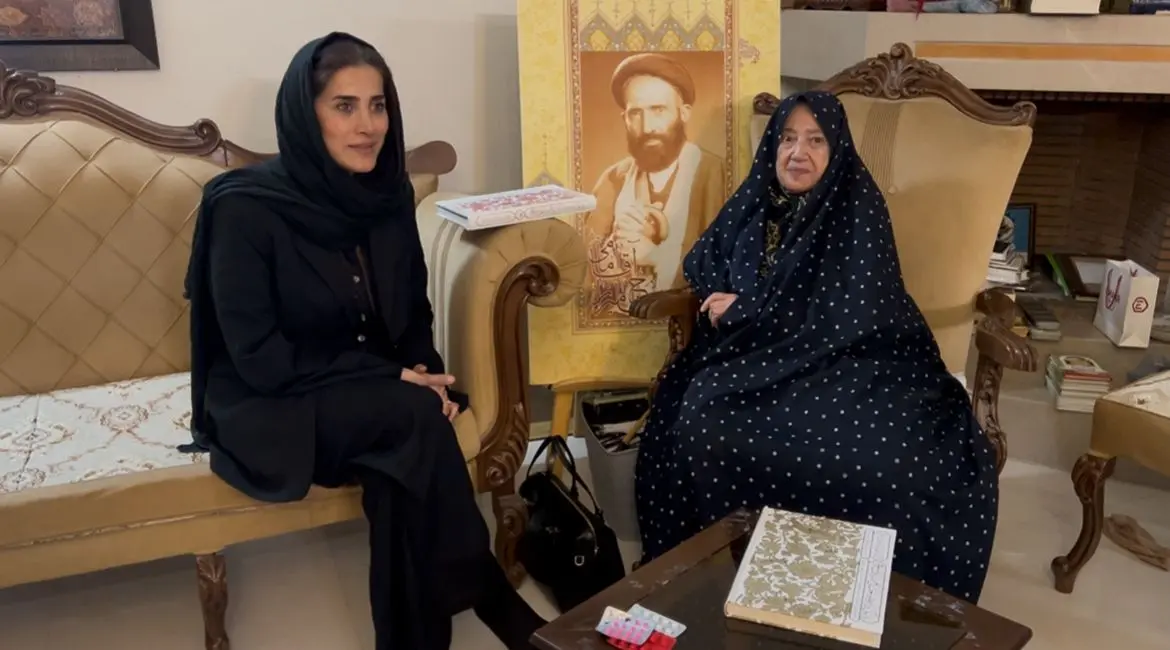
The founder of Baran Auction stresses:
“In Iran’s art community, Zinat al-Sadat Emami must be recognized as a keeper of practical heritage: an artist who not only produces exemplary works but also preserves and transmits technical knowledge through the master-apprentice tradition. This dual role—creation and preservation—places her in a unique position. She is a reliable reference for researchers and collectors and deserves to be recognized across the region and the world.”
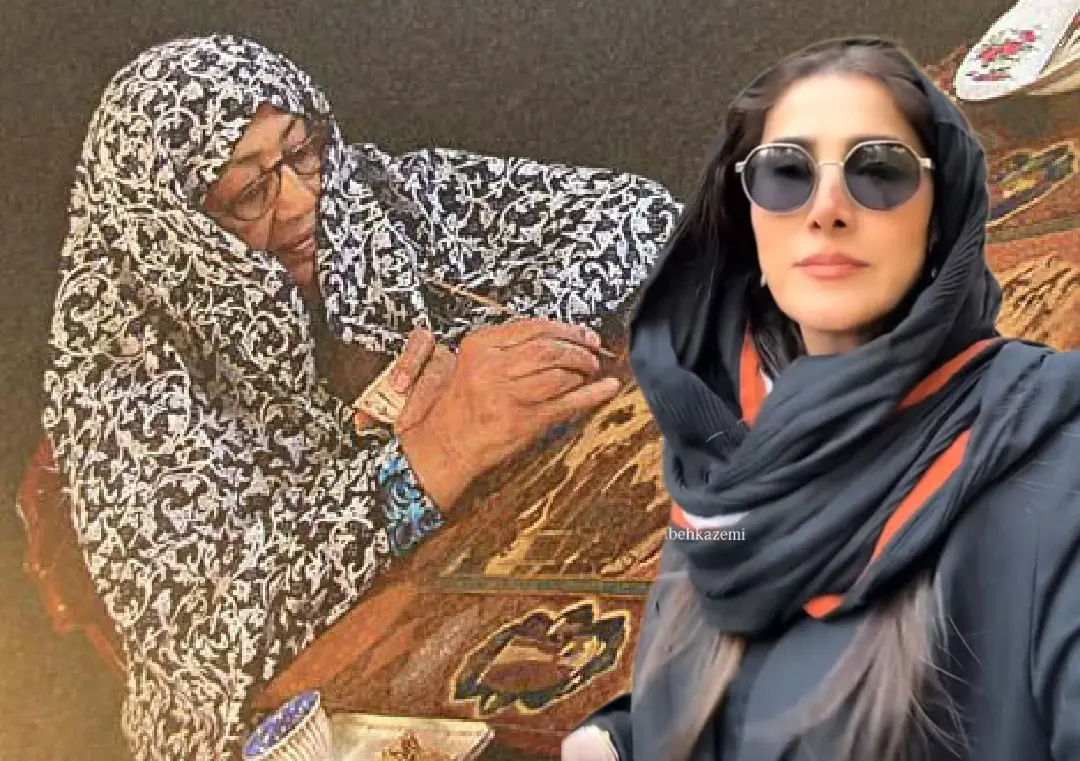
Mahboubeh Kazemi concludes:
“Zinat al-Sadat Emami embodies the continuity of an artistic tradition that—with all its technical refinement and spiritual depth—still has the power to captivate the contemporary eye. For viewers and collectors alike, encountering her work is an invitation to witness ‘hand-crafted time,’ where every delicate line, every burn mark, and every illuminated flourish reflects hours spent in dialogue with history and spirituality.”